

Everything you ate this morning is about to embark on a long journey. Over the coming weeks, that food will be sequentially transformed. First into plasma, then blood, then muscle, then fat, then bone, then nerve tissue, and finally into reproductive essence. Each stage extracts what it needs and hands a purer substance forward.
At the end of this cascade, a concentrated distillate emerges that is simultaneously the master regulator of your immune system, the nourishing substrate of your brain, and the physical expression of what we intuitively call vitality.
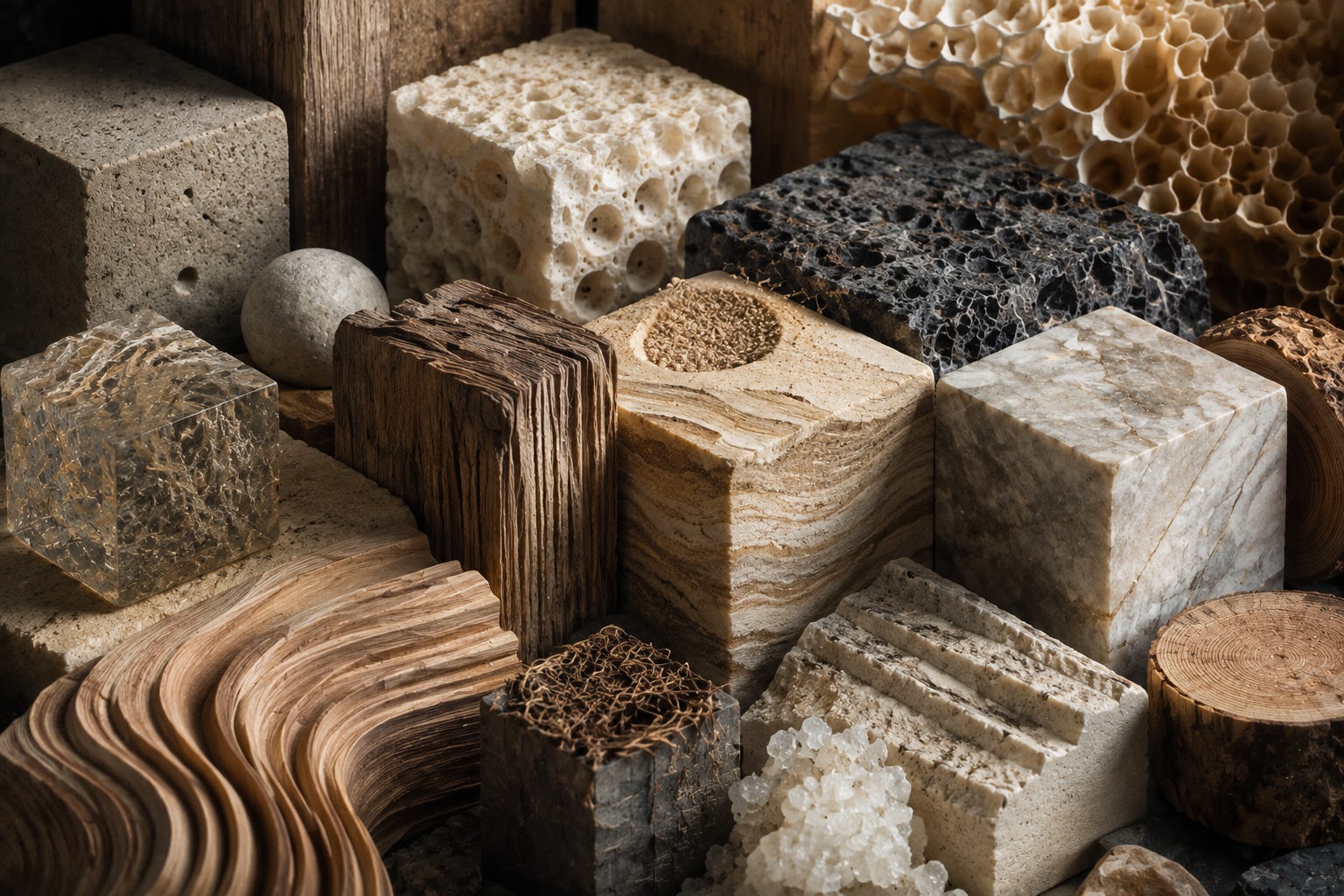
Ayurveda calls this essence Ojas.
Long before microscopes revealed tissue architecture and endocrinologists mapped the crosstalk between organs, the ancient physicians of India described the human body as a living refinery. They called it the Sapta Dhatus, or seven tissues. What we are only now discovering in laboratory research is that this ancient sequence is not metaphor. It is biology.
The Seven Dhatus as a Biological Sequence
The seven tissues unfold in strict order in their Sanskrit nomenclature: Rasa (plasma and lymph), Rakta (blood), Mamsa (muscle), Meda (fat and adipose tissue), Asthi (bone and cartilage), Majja (marrow and nerve tissue), and Shukra/Artava (reproductive tissue).
Classical Ayurveda offers three complementary models of how the dhatus form, and the commonly cited “five days per tissue, 35 days total” is a teaching approximation rather than a literal timeline. The superficial tissues do refine in days. The deeper ones, bone and marrow and reproductive essence, take weeks to months, which is precisely why Ojas is so difficult to accumulate and so easy to lose.
Modern data for tissue turnover confirms this graduated rhythm. Plasma proteins renew in hours to days. Red blood cell precursors mature in the marrow over roughly five to seven days. Muscle protein synthesis cycles in days to weeks. Bone remodeling runs on cycles of three to six months. Spermatogenesis takes roughly ten weeks from stem cell to mature cell. The pattern is unmistakable: the deeper the tissue, the more the body invests in it, and the more it protects what it has built.
Rasa and Rakta: The First Two Refinements
Rasa dhatu, plasma and lymph, is the first substance the body builds from what you eat. Its qualities are visible in skin luminosity, mucous-membrane moisture, emotional equanimity, and the responsiveness of your immune system. When Rasa is depleted, you feel dry, brittle, and inexplicably lonely. When it is nourished, you glow.
Rakta dhatu, or blood, determines oxygenation, tissue vitality, and the body’s inflammatory tone. In a modern sense, Rakta encompasses hemoglobin quality, iron status, endothelial function, and the delicate calibration of inflammatory cytokines that shapes everything from mood to cardiovascular risk.
Meda and Asthi: The Intelligence Reservoirs
Here Ayurveda departs radically from the mechanical view of the body still taught in most medical schools.
Meda, adipose tissue or body fat, is not passive storage. It is an endocrine organ, secreting leptin, adiponectin, and estrogen, regulating appetite, insulin sensitivity, and reproductive signaling. Healthy Meda is a thinking, communicating tissue.
Asthi, bone and cartilage, is likewise more than scaffolding. Bone secretes osteocalcin, a hormone whose discovery by Gerard Karsenty at Columbia University has quietly rewritten physiology. Osteocalcin crosses the blood-brain barrier and binds neurons in the hippocampus, brainstem, and midbrain, enhancing the synthesis of serotonin, dopamine, and norepinephrine and stimulating BDNF, the neurotrophic factor at the heart of learning and memory. It activates AMPK in skeletal muscle, improving endurance and glucose uptake. It stimulates insulin secretion in the pancreas. It plays a role in reproductive function, most clearly demonstrated in male fertility.
A single skeletal protein regulates brain, muscle, metabolism, and reproduction in one integrated network. The ancient claim that Asthi feeds Majja which feeds Shukra is no longer a poetic sequence. It is a molecular pathway.
Majja: Where Nerve and Marrow Meet
Majja dhatu encompasses both nerve tissue and bone marrow, tissues Ayurveda treats as one because they share a common function: the production of intelligence and immunity. Modern hematology now recognizes stem cell health in bone marrow as a master regulator of systemic aging. The clarity of your thought, the stability of your emotions, and the vigor of your immune response all rest on the vitality of this deepest, most protected layer.
Shukra/Artava and the Making of Ojas
The final refinement, reproductive tissue, is the most energetically expensive substance the body produces. In classical Ayurveda, when Shukra is fully saturated, a subtle upward movement called urdhvaretas occurs. Refined essence flows upward rather than outward, producing Ojas, the reserve that expresses itself as radiant health, deep immunity, magnetic presence, and mental clarity.
Ojas is not a metaphor for feeling good. It is the biological signature of a body that has completed its full refinement cycle uninterrupted by depletion, stress, or dispersion.
A Seven-Day Practice: The Dhatu Nourishment Inventory
Give each tissue a single day of focused attention.
Day 1, Rasa: hydration, warm cooked foods, restorative sleep.
Day 2, Rakta: iron-rich dark leafy greens, beets, pomegranate.
Day 3, Mamsa: high-quality protein, resistance movement.
Day 4, Meda: healthy fats, morning sunlight, unhurried meals.
Day 5, Asthi: weight-bearing exercise, mineral-rich broths, calcium-dense foods.
Day 6, Majja: deep sleep, omega-3s, silence.
Day 7, Shukra/Artava: energy conservation, conservation of attention (fewer screens, fewer scattered pursuits), nourishing warmth.
Notice where you feel most depleted and most robust. Your body will tell you exactly which layer needs love.
The Question That Remains
The seven dhatus are the body’s raw material. But who is managing the building project? How does each organ know its role and coordinate with every other system in real time, without a central foreman?
The answer lies in a map so sophisticated that Ayurveda took centuries to fully articulate: the fifteen subdoshas, corresponding with uncanny precision to the distributed intelligence network that modern neuroscience, cardiology, and gastroenterology are still mapping today.
The body has a mind in every organ, and Ayurveda discovered it first.
Namaste,
Deepak