

Everyone knows the pungent taste and warm aroma of garlic. Its botanical name is Allium sativum, which places it in the onion family. Depending on the cuisine you grew up with, garlic may have always been in the air, appeared occasionally in Italian cooking, or been avoided altogether. Ayurveda considers an herb’s qualities in relation to health and healing, which is the perspective we will take here.
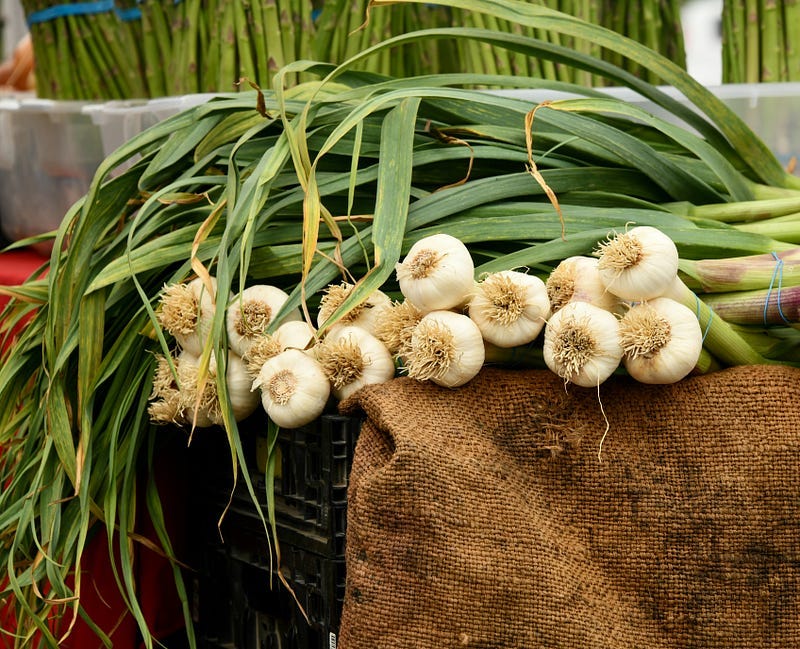
After the cooling, soothing qualities of Aloe vera, our first herb in this series, garlic takes us in a very different direction. It is an herb associated with the qualities of heat, movement, and unmistakable presence. This contrast reminds us that no single quality is inherently healing. Its value depends on what is needed, when it is needed, and by whom.
Garlic is ideal for exploring Qualia Medicine because it makes the power of qualities immediate and unmistakable. You can smell it, taste it, and feel its effects directly. Warming, pungent, penetrating, and hard to ignore, a single clove can transform an entire dish.
What happens when you cut it
Wrapped inside its papery skin, a clove of garlic has only a mild scent. Cutting or crushing it breaks open the cells, bringing the enzyme alliinase together with alliin, one of the bulb’s sulfur-containing compounds. The result is allicin, a highly reactive compound responsible for much of the aroma of freshly crushed garlic. The plant’s chemistry becomes an immediate experience.
Cooking changes that experience. Raw garlic is fiery, almost electric on the tongue. Sauté it, and the edge begins to soften. Roast a whole bulb, and the cloves become sweet, tender, and spreadable. The plant is the same, yet preparation changes the qualities you receive. This is useful in the kitchen, and it also expresses a central principle of Ayurveda: how something is prepared matters as much as what is prepared.
A bulb with five tastes
There is a lesson here in transformation. The clove that seems almost aggressive when raw becomes gentle with time and heat. Its sharpness doesn’t simply disappear; it ripens into another expression. In much the same way, qualities in the body and mind aren’t fixed. Under the right conditions, they soften, deepen, and find a more harmonious form.
Ayurveda calls garlic lashuna or rasona. Traditional descriptions say it contains five of the six tastes, with only sour missing. Pungency leads, accompanied by sweet, salty, bitter, and astringent notes. Garlic is also described as hot, oily, heavy, sharp, and mobile. These qualities help explain why it has long been used when a person feels cold, sluggish, congested, or weighed down.
In terms of the three doshas, garlic generally settles Vata and Kapha, while its heat may increase Pitta. In ordinary terms, someone who feels cold, dull, or stuck may welcome garlic’s warmth and stimulating qualities. Someone already dealing with heartburn, flushed skin, irritability, or excess heat may find that a large amount makes matters worse. The body often communicates this plainly.
Some yoga traditions limit garlic because its stimulating quality is thought to interfere with the stillness sought in meditation. Ayurveda, however, has long valued garlic as a potent medicinal food. Both views make sense within their respective traditions. An alerting, activating effect may be welcome at lunch, during a cold season, or in a sluggish state, yet unwelcome before sleep or a long meditation.
What the research suggests
Modern studies have focused on cardiovascular and metabolic health. According to the National Center for Complementary and Integrative Health, garlic supplements may produce small reductions in total and LDL cholesterol in people with high cholesterol and may slightly lower blood pressure in people with hypertension. A 2024 review of randomized trials also found improvements in several measures of blood glucose and cholesterol, although the studies varied in quality and in the preparations used.
These findings suggest potential benefits from certain garlic preparations, but they do not establish that ordinary dietary garlic produces the same effects. Fresh cloves, garlic powder, aged extract, and garlic oil contain different mixtures of compounds, so results from one preparation do not automatically apply to another. Garlic is not a substitute for blood pressure medication, cholesterol treatment, exercise, sleep, or a healthy diet.
Garlic is also widely studied for its antimicrobial effects. Many results come from test-tube studies, where concentrated compounds meet bacteria or fungi directly. That research is valuable, but it doesn’t mean eating extra garlic will treat an infection in the body. Garlic belongs in a meal; an infection deserves proper diagnosis and care.
Experimenting in the kitchen
For a direct experience, try garlic in three forms on different days. Smell a freshly cut clove. Taste a small amount briefly cooked in olive oil or ghee. On another day, roast a whole bulb until the cloves are soft and mellow. Notice how each form affects the aroma, your mouth and stomach, your breath, and the quality of your attention. Raw garlic may feel bright and urgent, while roasted garlic may feel warm and nourishing.
Approach this less as a test than as a moment of curiosity. There is no correct response to discover. One person experiences garlic as enlivening and another as overwhelming. Even your own response changes with the season, the time of day, and your state of balance. The value lies in becoming quiet enough to notice.
The point is not to reach a verdict about garlic but to become more precise about your own response. Does it awaken your appetite or create welcome warmth? Does too much leave your chest burning or your mind overly alert? Personal observation does not replace medical evidence, but it can help you relate that evidence to your own experience.
A few sensible limits
Garlic in ordinary food amounts is generally well tolerated. Larger amounts and concentrated supplements may cause heartburn, stomach upset, body odor, or bad breath. Garlic supplements can increase bleeding risk, especially for people taking anticoagulants, aspirin, or other medicines that affect clotting, and for those approaching surgery. Raw garlic placed directly on the skin can cause serious irritation or burns.
Using garlic as food and taking it as a concentrated supplement are different choices. For most people, the simpler starting point is also the more pleasant one: a clove on the cutting board, a warm pan, and enough attention to notice what this remarkable bulb brings to the table.
Namaste,
Deepak
Medical note: This article is educational and does not replace individualized medical care. Ask a qualified clinician before using concentrated garlic supplements if you take anticoagulants, aspirin, blood pressure or diabetes medicines, have a bleeding disorder, or are preparing for surgery.
If you would like to explore this subject further, I invite you to visit DeepakChopra.ai.

──────────────────────────
Deepak’s latest book, Awakening in the Final Chapter, is available as hardcover, ebook, and audiobook.